MOI-Optimized Mallet Putter
A custom mallet-style putter head designed in SolidWorks around a single goal: align the shaft axis as closely as possible through the head's center of mass, using iterative mass-property studies rather than trial-and-error shaping.
- Role
- Design & Manufacturing
- Tools
- SolidWorks, Mass Properties, GD&T
- Materials
- 6061 Aluminum, Brass
- Status
- Completed & Tested
Minimizing Off-Center Torque
Putter performance is sensitive to how mass is distributed around the head. Off-center strikes twist an unbalanced head open or closed at impact, sending the ball offline. The goal of this project was to design a mallet-style head where the shaft axis passes as close as possible through the head's center of mass — a near-zero-torque, face-balanced configuration — so that mis-hits stay truer than they would on a conventional blade or heel-toe design.
Third-Generation Geometry
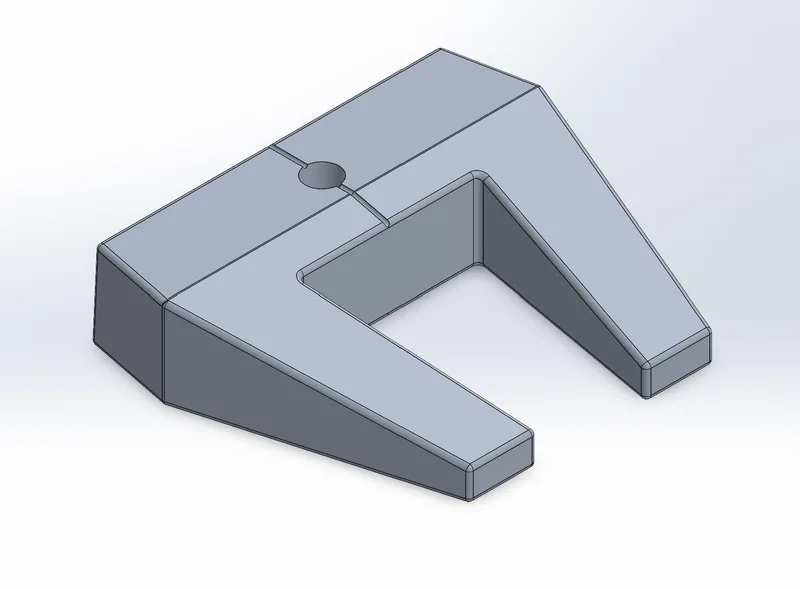
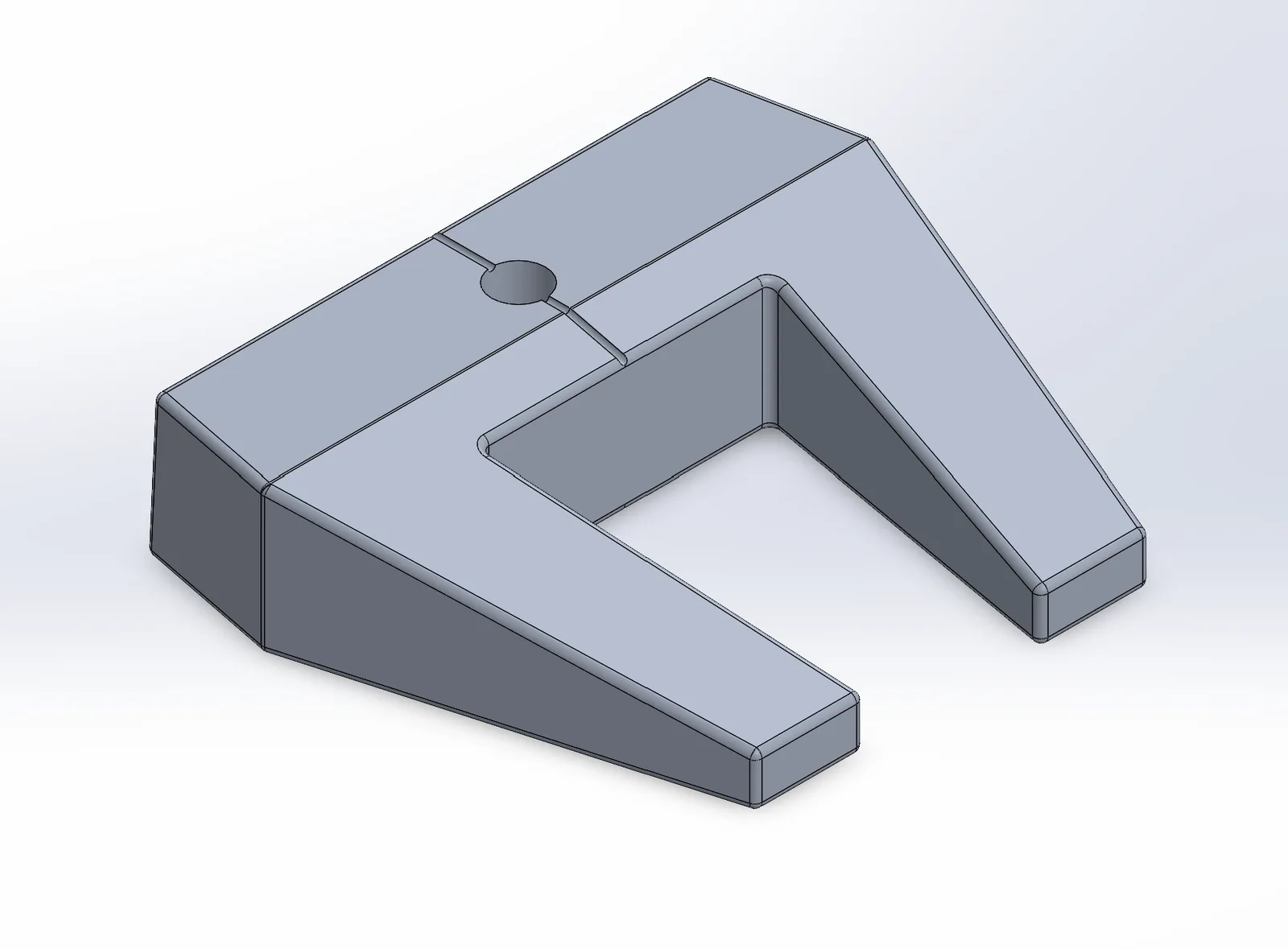
The head shown here is the third iteration of the design. Earlier concepts were evaluated and set aside in favor of this open, dual-wing mallet form, which gave more usable volume at the perimeter for weighting while keeping a compact footprint behind the ball.
Iterating with SolidWorks Mass Properties
SolidWorks mass-property and mass-distribution tools were used throughout development to track the head's center of mass relative to the shaft axis as the geometry changed. Wing length, cavity depth, and wall thickness were all adjusted in response to these studies rather than by eye.
The target weight for the finished head-and-body assembly is approximately 360 g, in line with typical mallet-putter weighting.
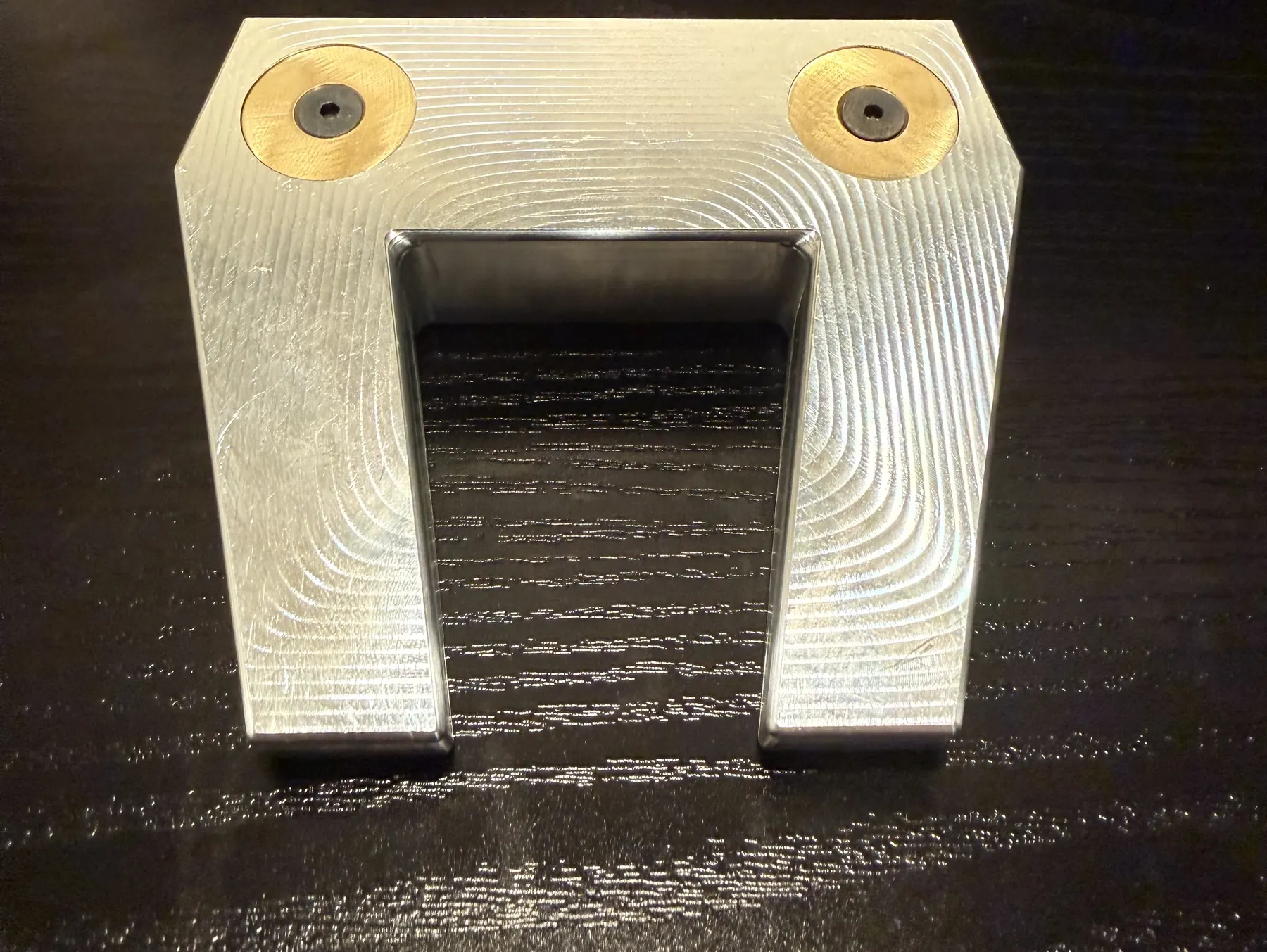
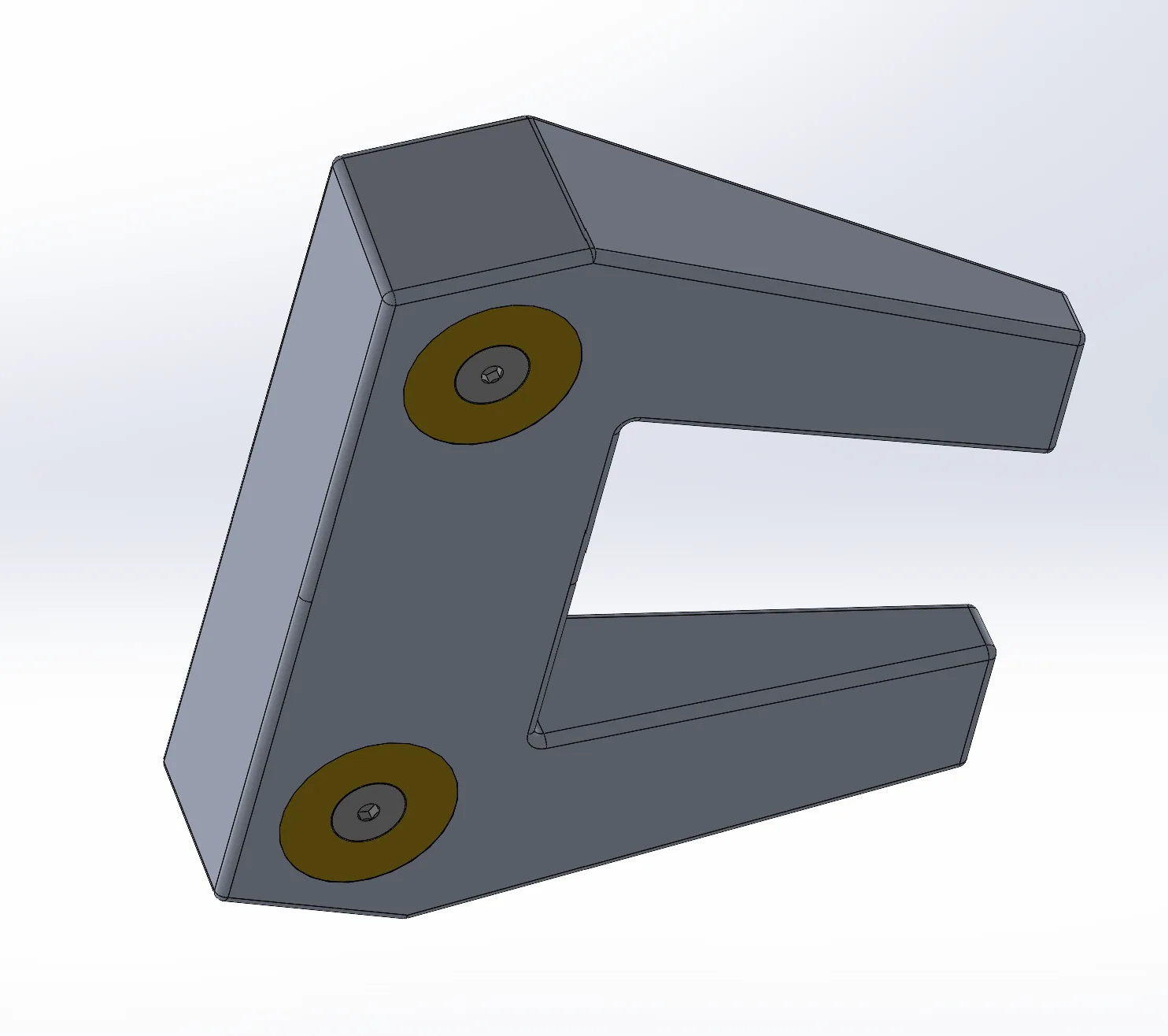
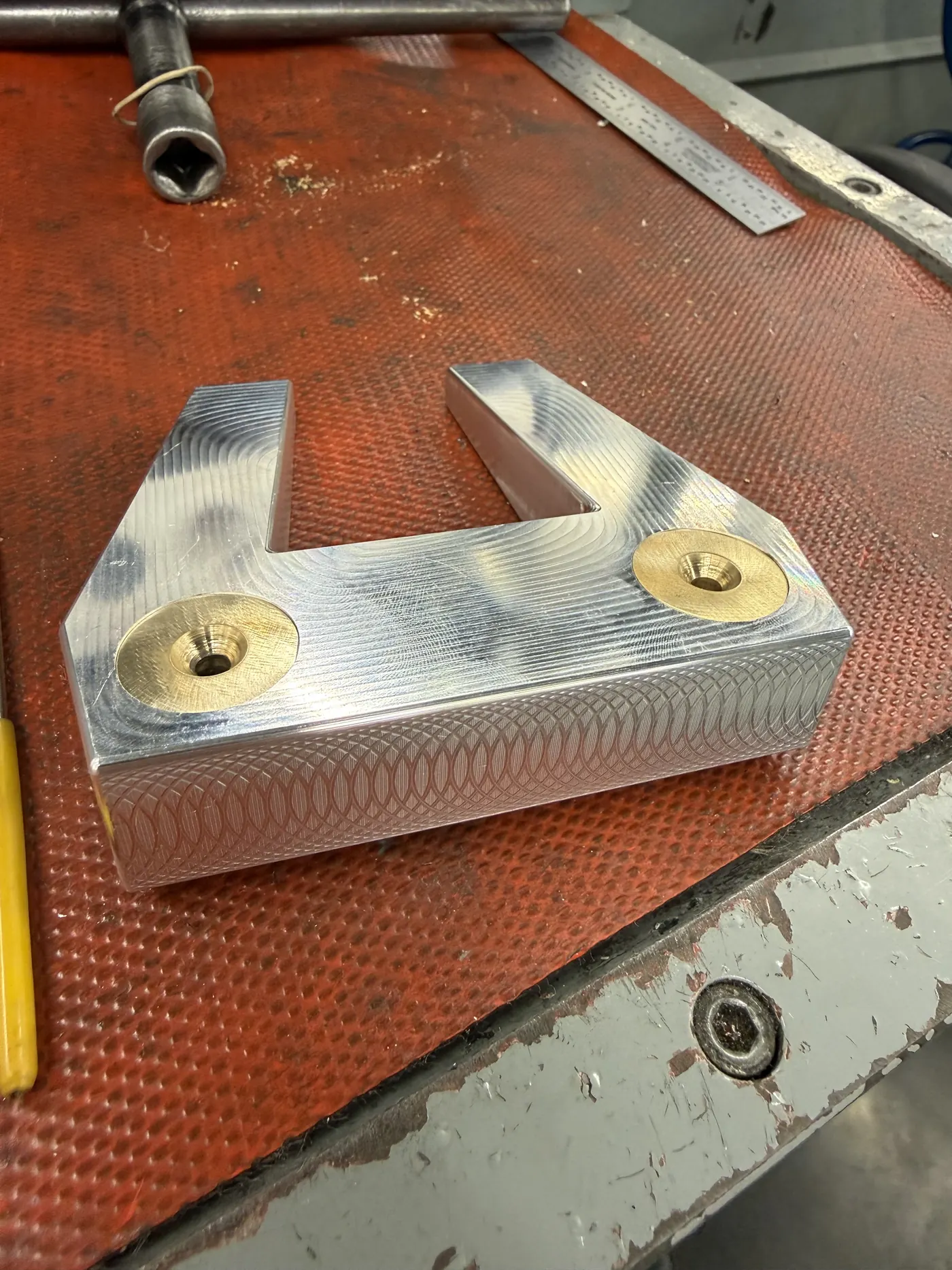
Assembled head with brass weights and screws installed. The measured mass closely matches the SolidWorks model prediction.
Removable Brass Weights
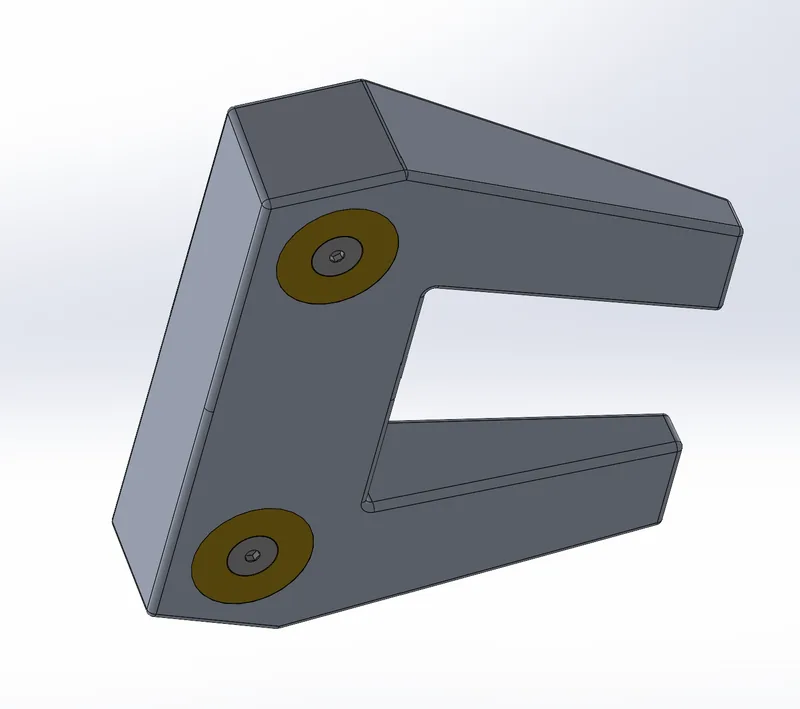
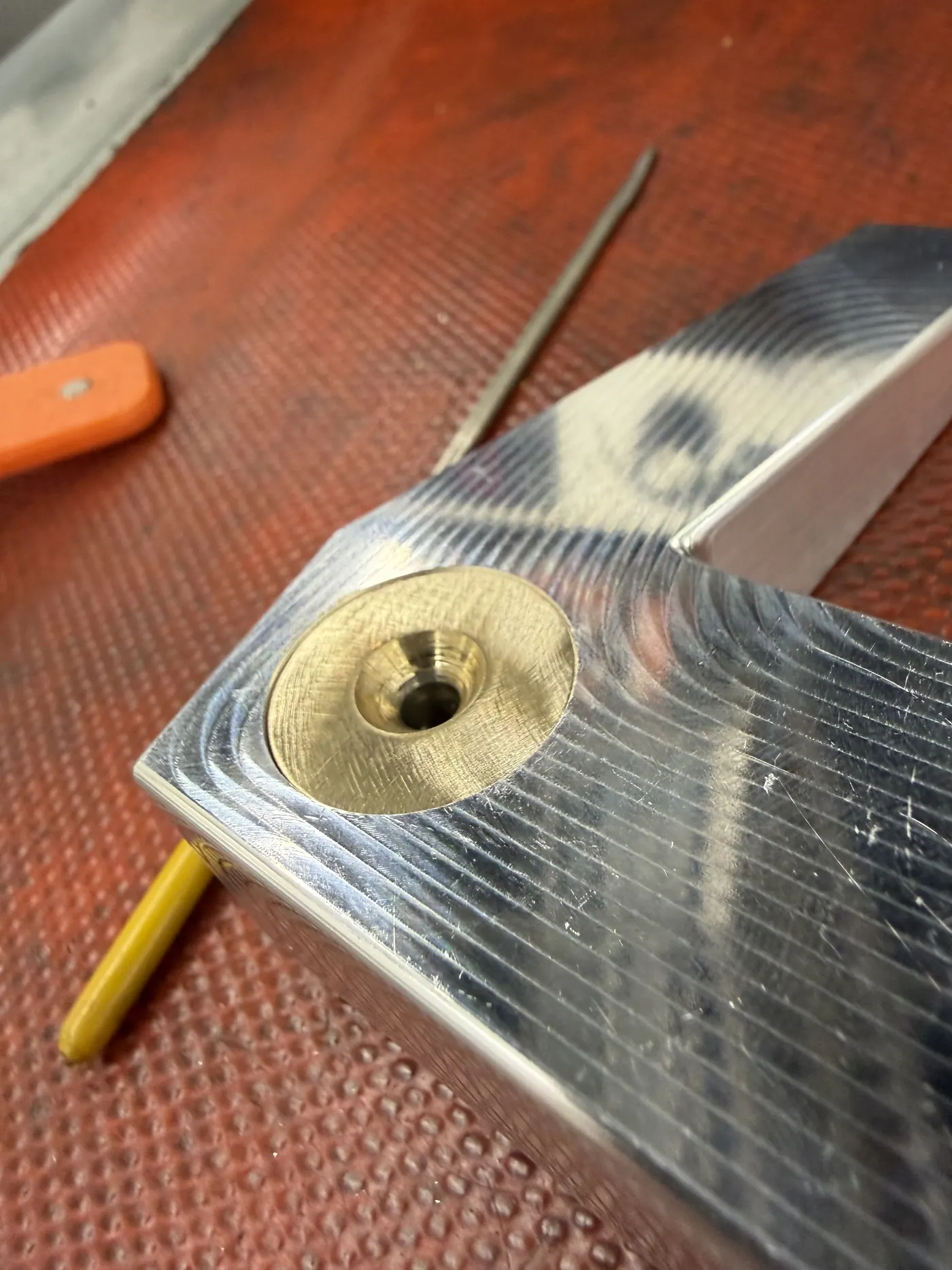
Two removable brass weights, seated near the heel and toe of the head, allow swing weight to be tuned independently of the aluminum body. Each weight is machined as a separate brass component and secured into the head with a socket flat-head screw, so the final balance can be adjusted without remaking the head itself.
Manufacturing Drawing Package
A complete manufacturing package was produced for the assembly: a toleranced drawing of the 6061-aluminum head, a drawing of the brass weight, and an exploded assembly view with a bill of materials. Click any sheet below to view it full size.
CNC Milling and Manual Turning
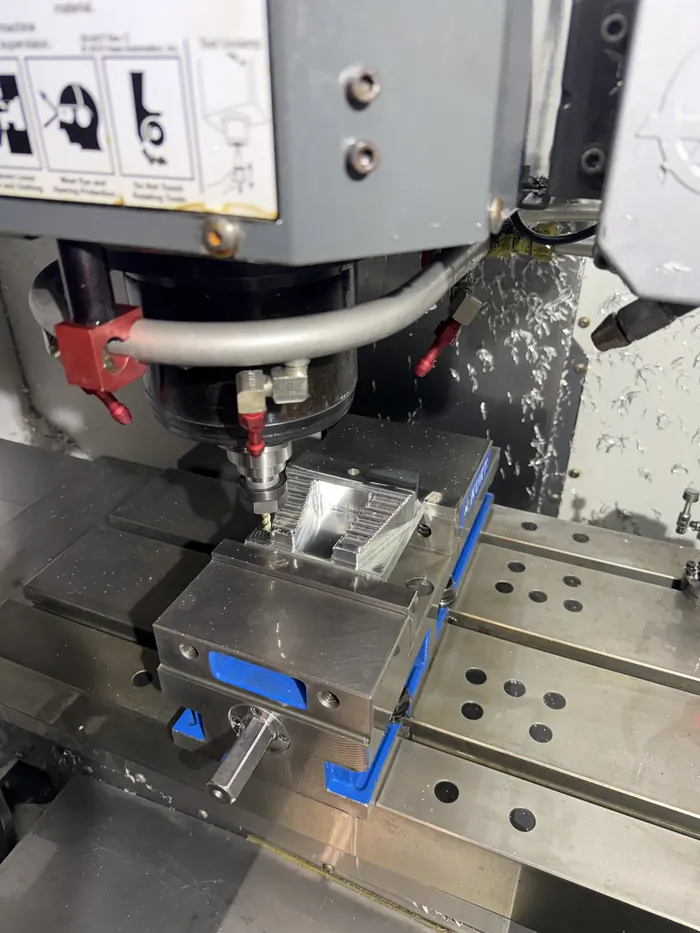
The aluminum head was CNC machined from a 6061 block, following the toleranced drawing above. The two brass weights were manufactured separately by hand — faced and turned on a manual lathe rather than machined on the mill. Both parts are now complete and test-fit into the assembly shown below.
Machining and Early Assembly
The photos and video below document the head and weights right after machining, before anodizing, the shaft, and the grip went on. Skip ahead to see the completed putter and on-green testing.
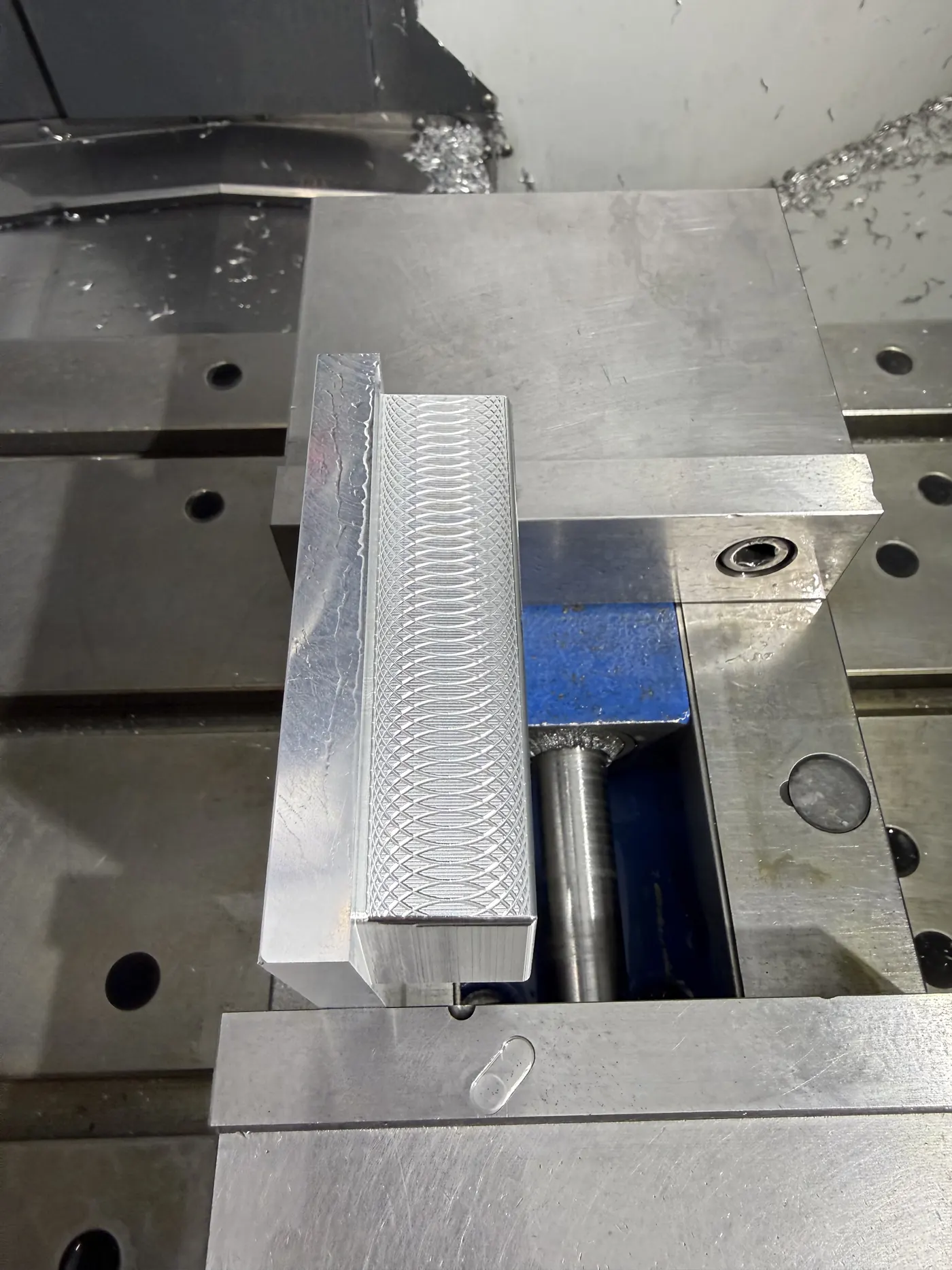
From Block to Head
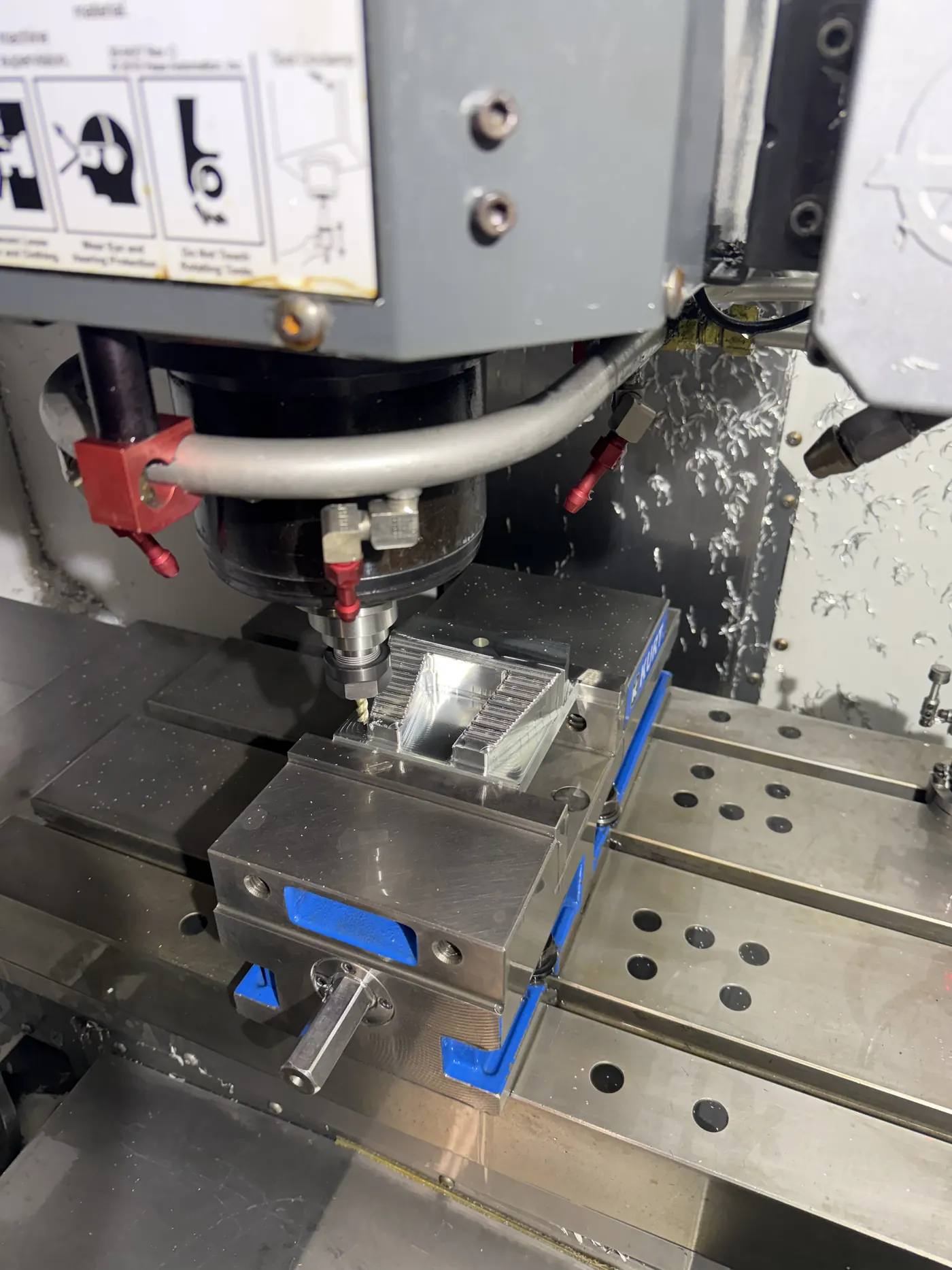
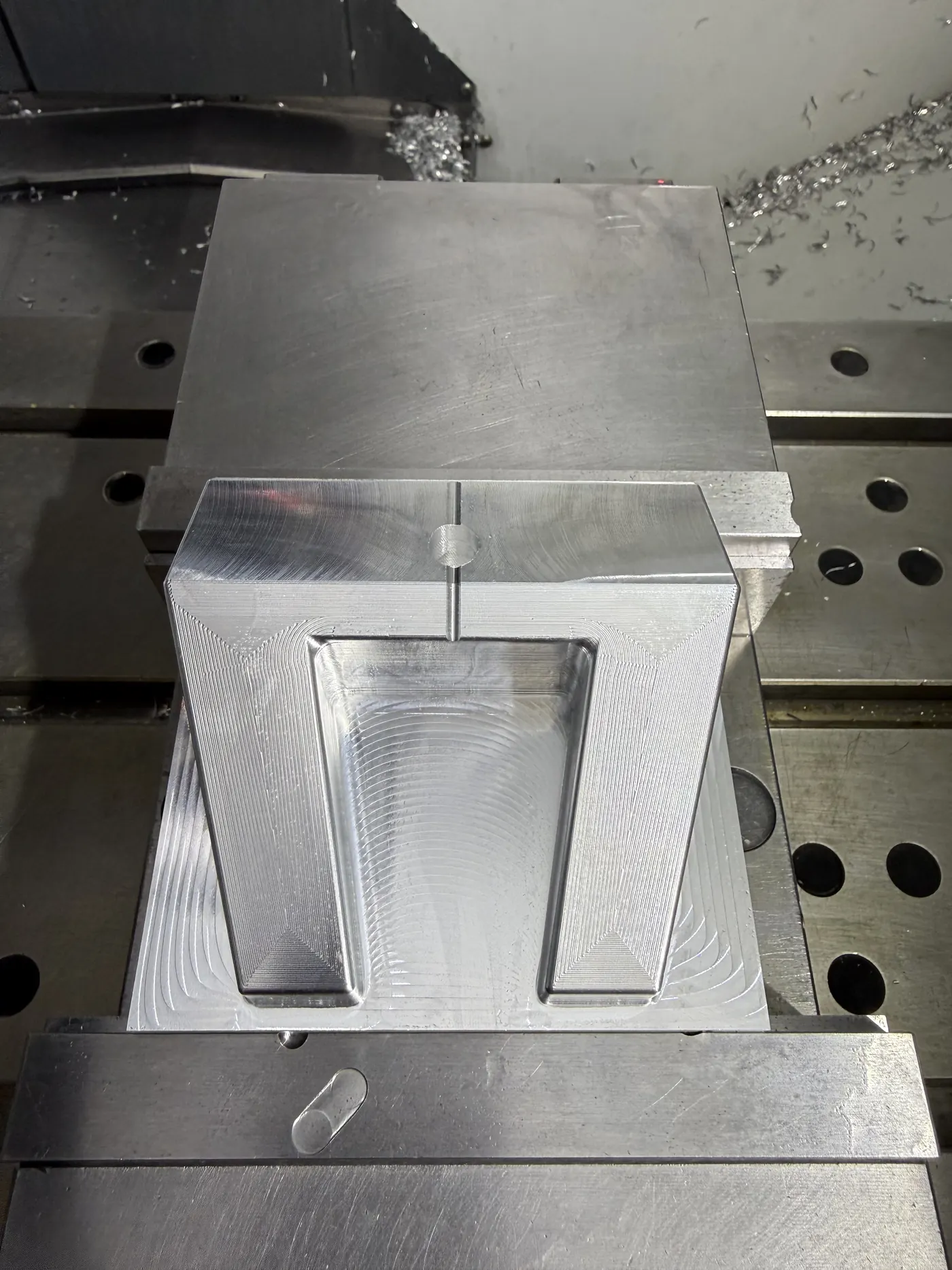
Roughing, forming the cavity, and machining the weight pockets, in that order.
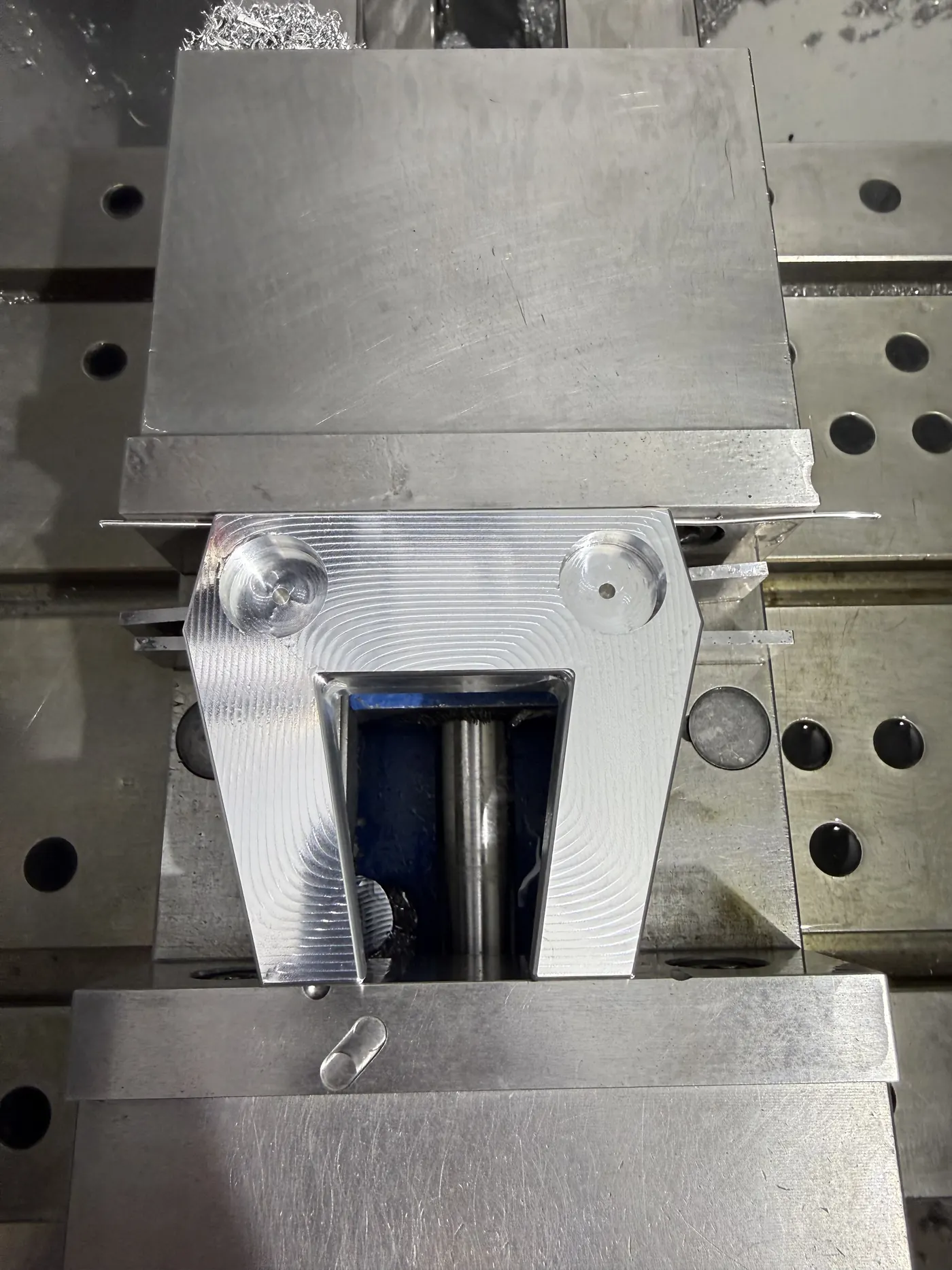
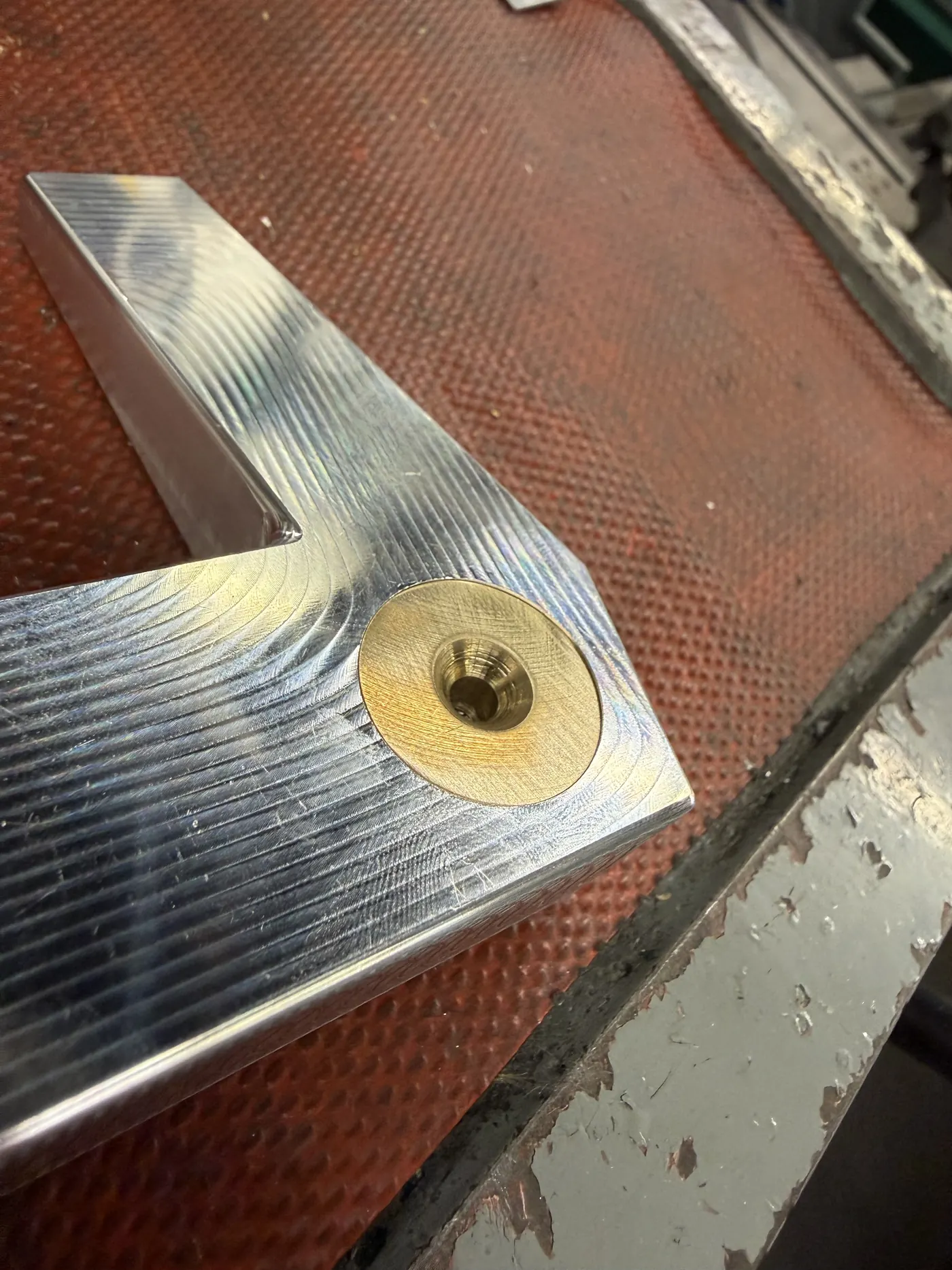
Surface Finish, Straight Off the Mill
A closer look at the face-milled surface on the cavity wall, showing the tool-mark pattern left by the end mill before any finishing or anodizing. This is the as-machined finish — nothing has been polished or coated yet.
Machined Head Assembly, Pre-Anodize
The finish shown here is straight off the mill and lathe — the head has not yet been anodized. Both brass weights are seated and secured with socket flat-head screws.
The Completed Putter
The final putter was assembled with a center-shaft configuration, a black steel shaft, and a SuperStroke grip, along with a machined alignment line across the top of the head. The aluminum head was finished and assembled with the brass sole weights, completing the transition from the original CAD model to a fully functional golf club.
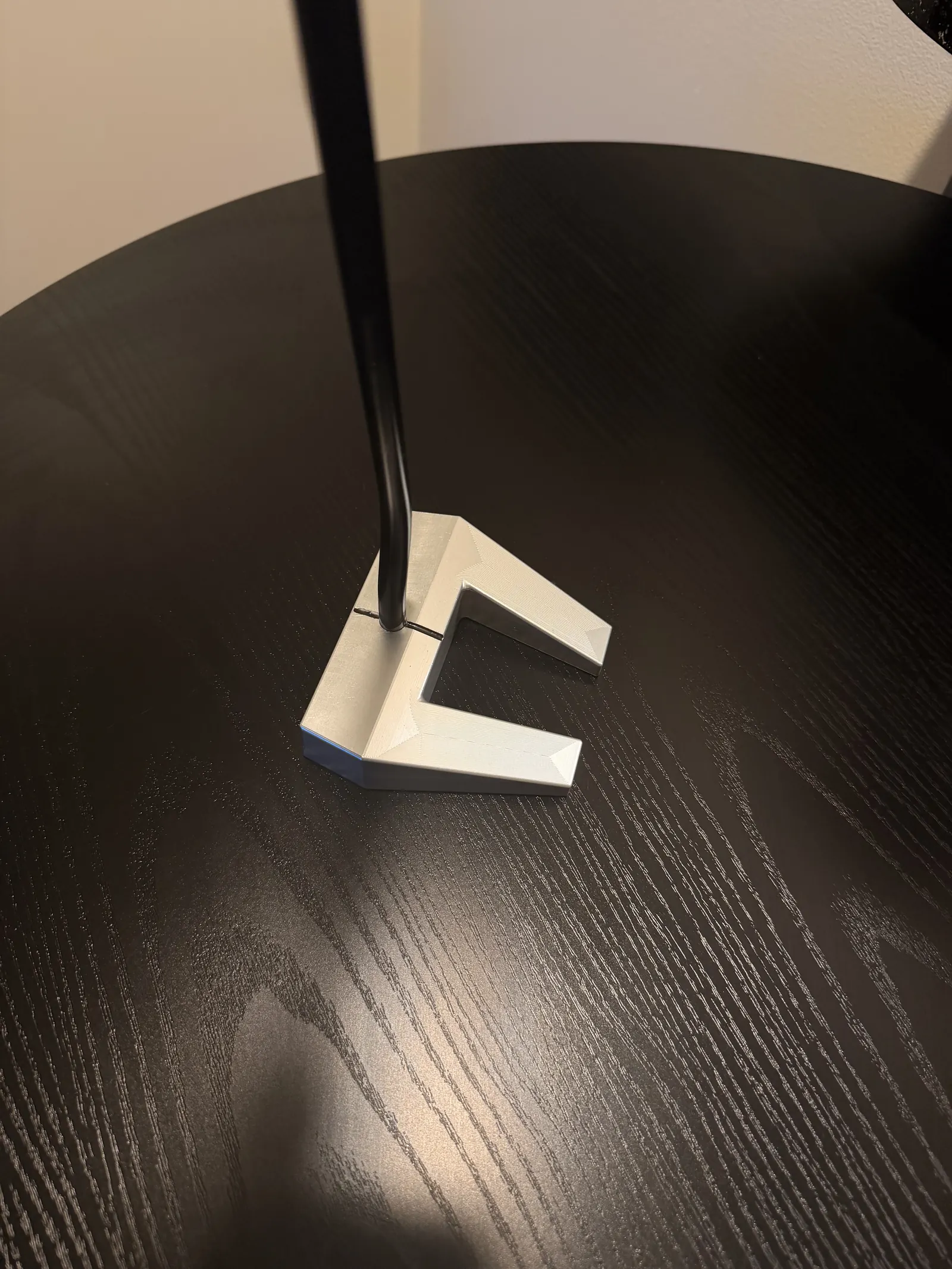
Mallet Geometry, Top-Down
A top-down view of the completed head, showing the full mallet outline, the rear cavity, the center-shaft entry, and the machined alignment line used for aiming at address.
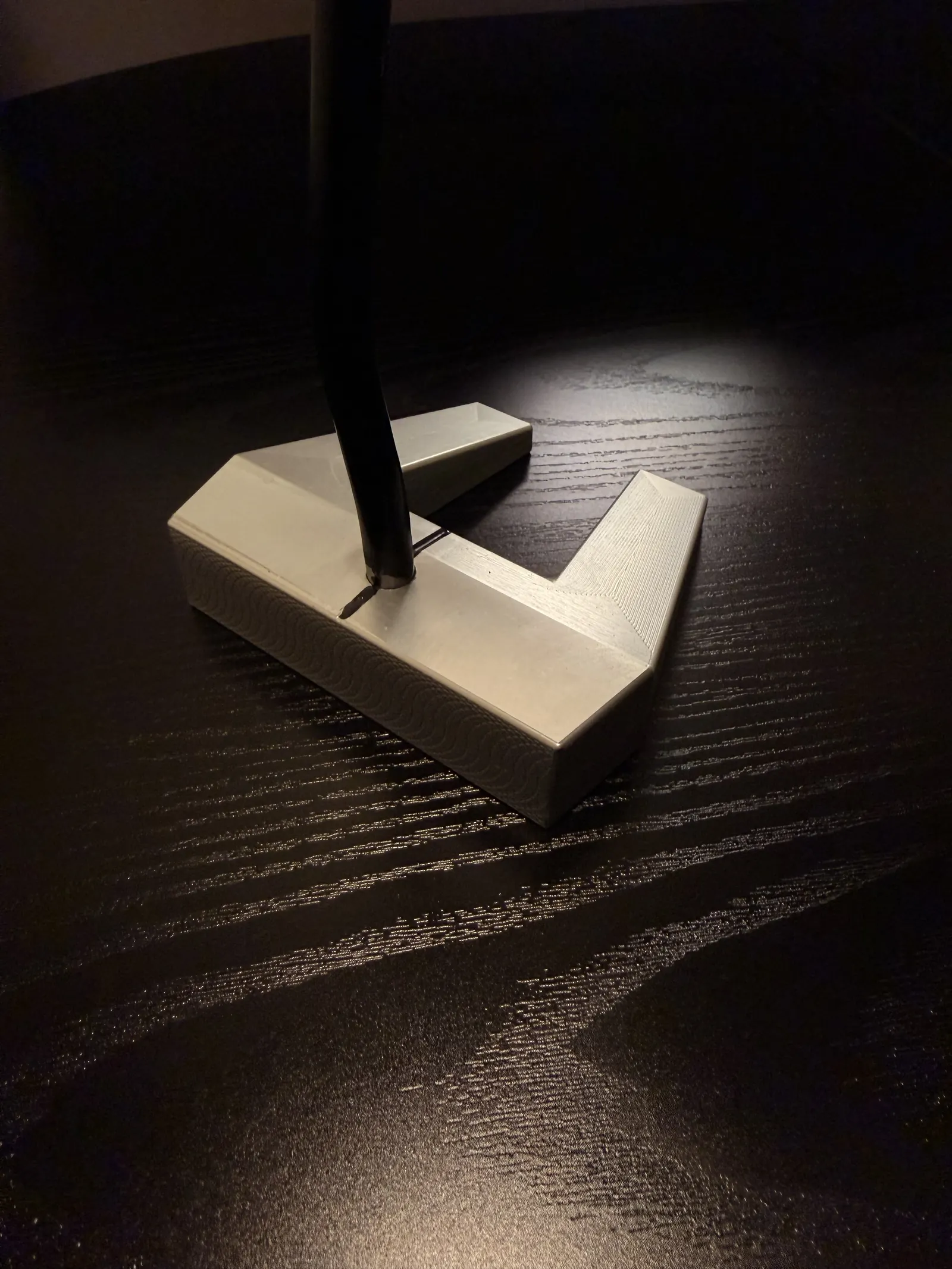
Finished Face and Milling Quality
A closer look at the finished head, showing the milled surface pattern and the shaft-to-head joint after final assembly.
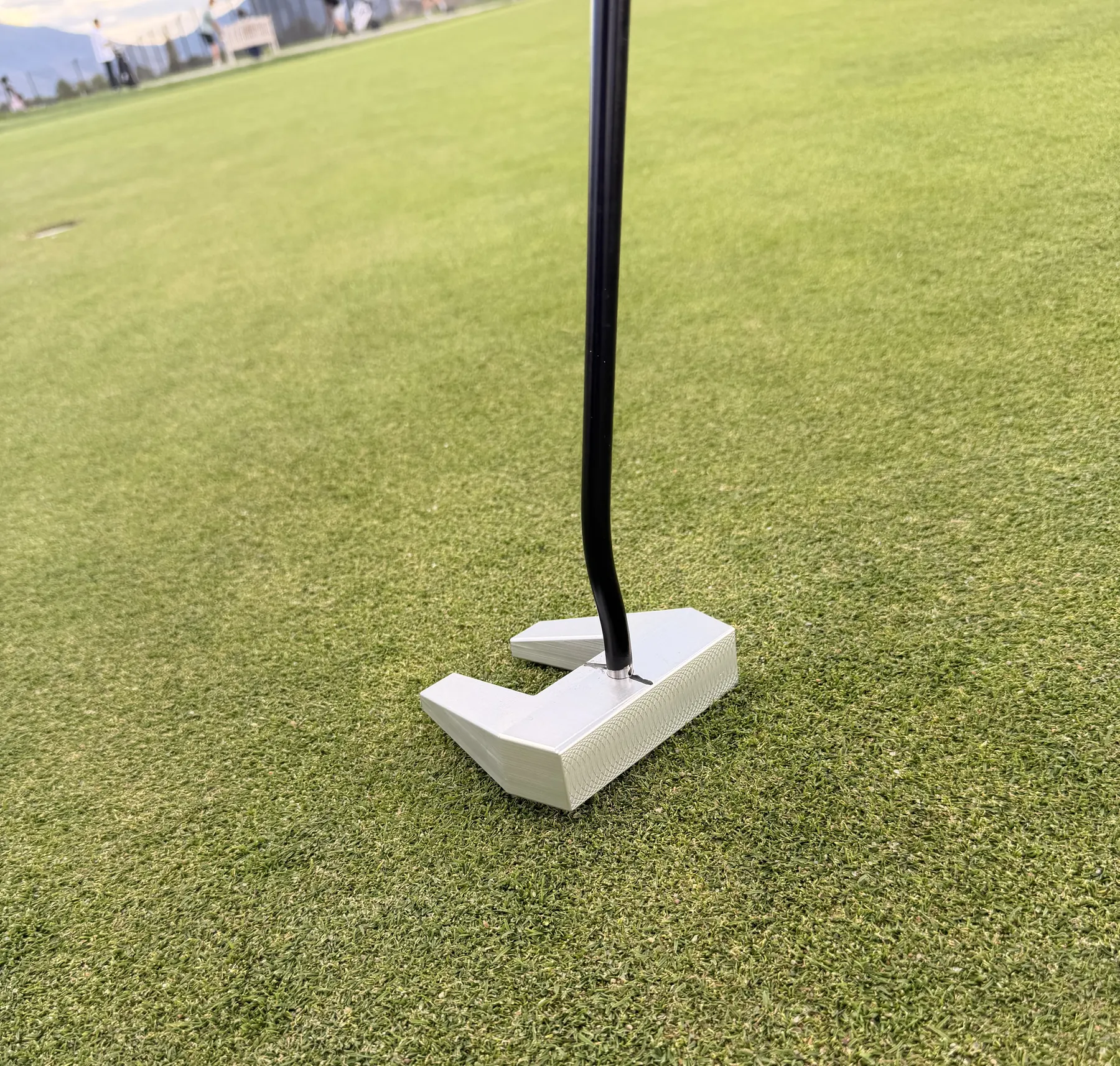
On-Green Testing
The completed putter was tested on a practice green to evaluate alignment, feel, face stability, and repeatability. The mallet geometry and center-shaft configuration produced a noticeably stable feel through the stroke and made it easier to return the face square at impact.

A Small Bonus: Rear-Cavity Ball Pickup
The rear cavity geometry also allows the putter to pick up a golf ball without bending down — a small side benefit of the mallet shape rather than a design requirement.