Parametric Combustion Box
As a Research Assistant in BYU's Mechanical Engineering Department, I design the combustion box for a research combustion-chamber assembly — a large, multi-layer structure built to respond parametrically as thermal design requirements evolve.
- Role
- Research Assistant
- Tools
- SolidWorks, Parametric CAD, GD&T
- Assembly
- 14 Parts · 3 Subassemblies
- Manufacturing
- In Collaboration with Valar Atomics
Built to Respond to Heat-Transfer Requirements
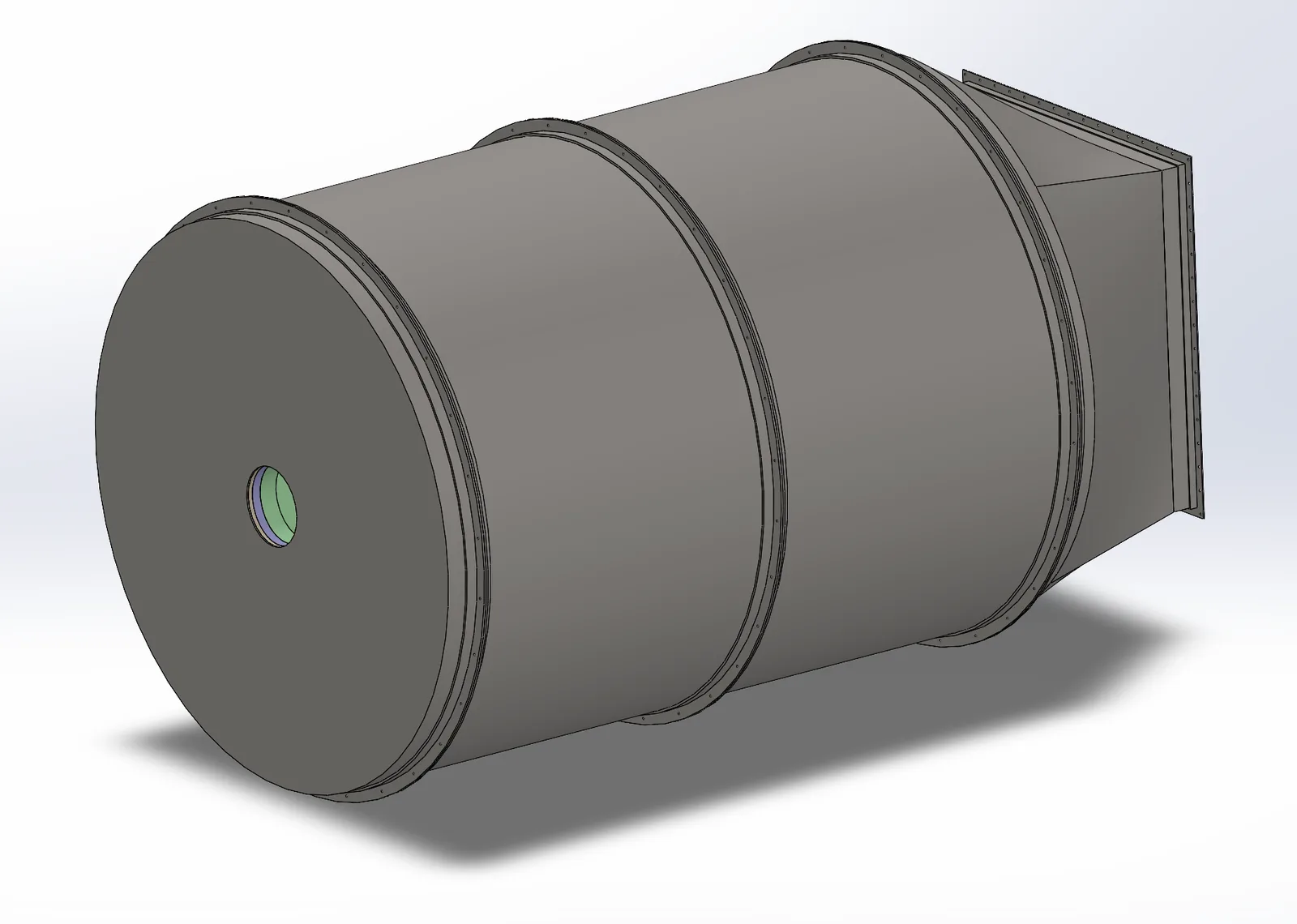
The combustion box model is built to respond directly to refractory-material thickness determined from the team's heat-transfer calculations. As thermal requirements change, the surrounding steel and insulation geometry updates with them rather than being re-modeled from scratch, which keeps the assembly consistent as the design matures.
Rectangular to Cylindrical
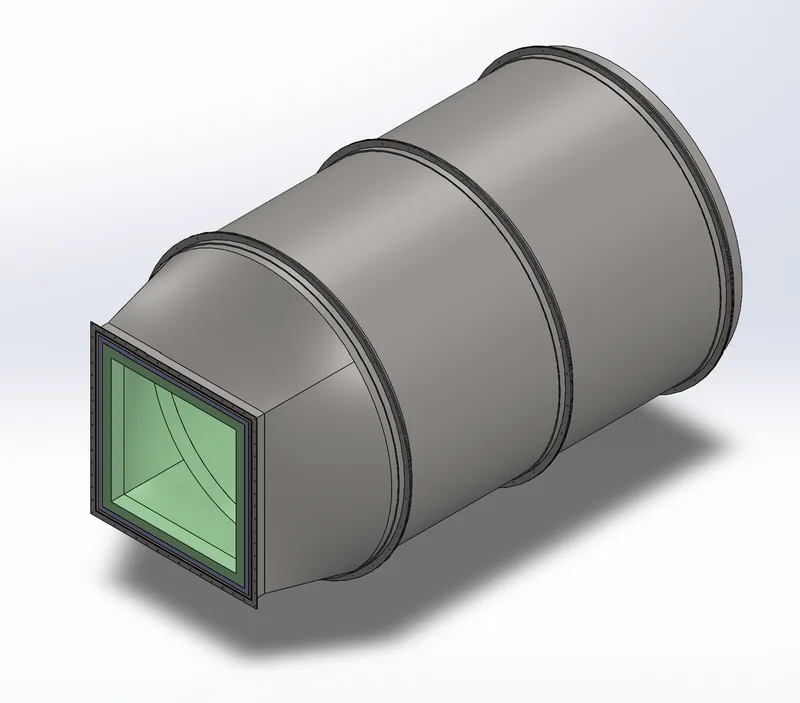
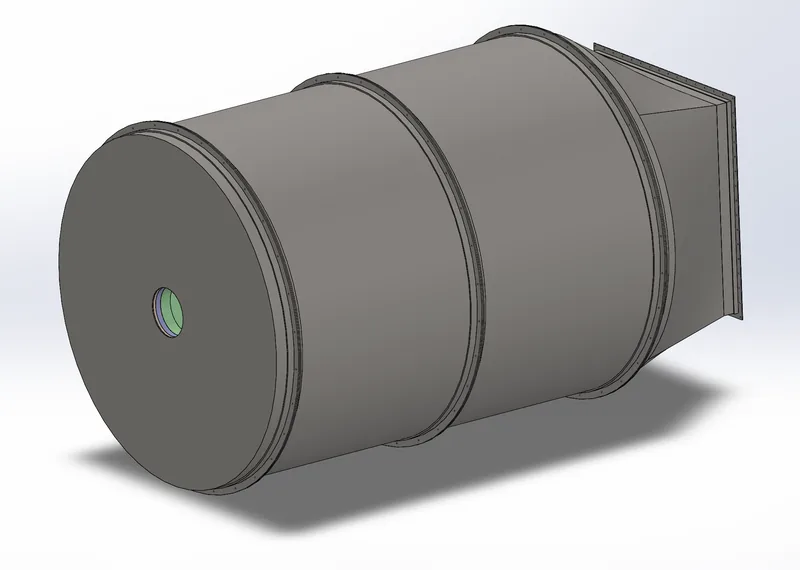
The design evolved from an early rectangular geometry into the cylindrical configuration shown throughout this page. The parametric architecture underlying the model made that transition manageable — major dimensions drive consistently through the assembly rather than requiring each part to be manually reworked.
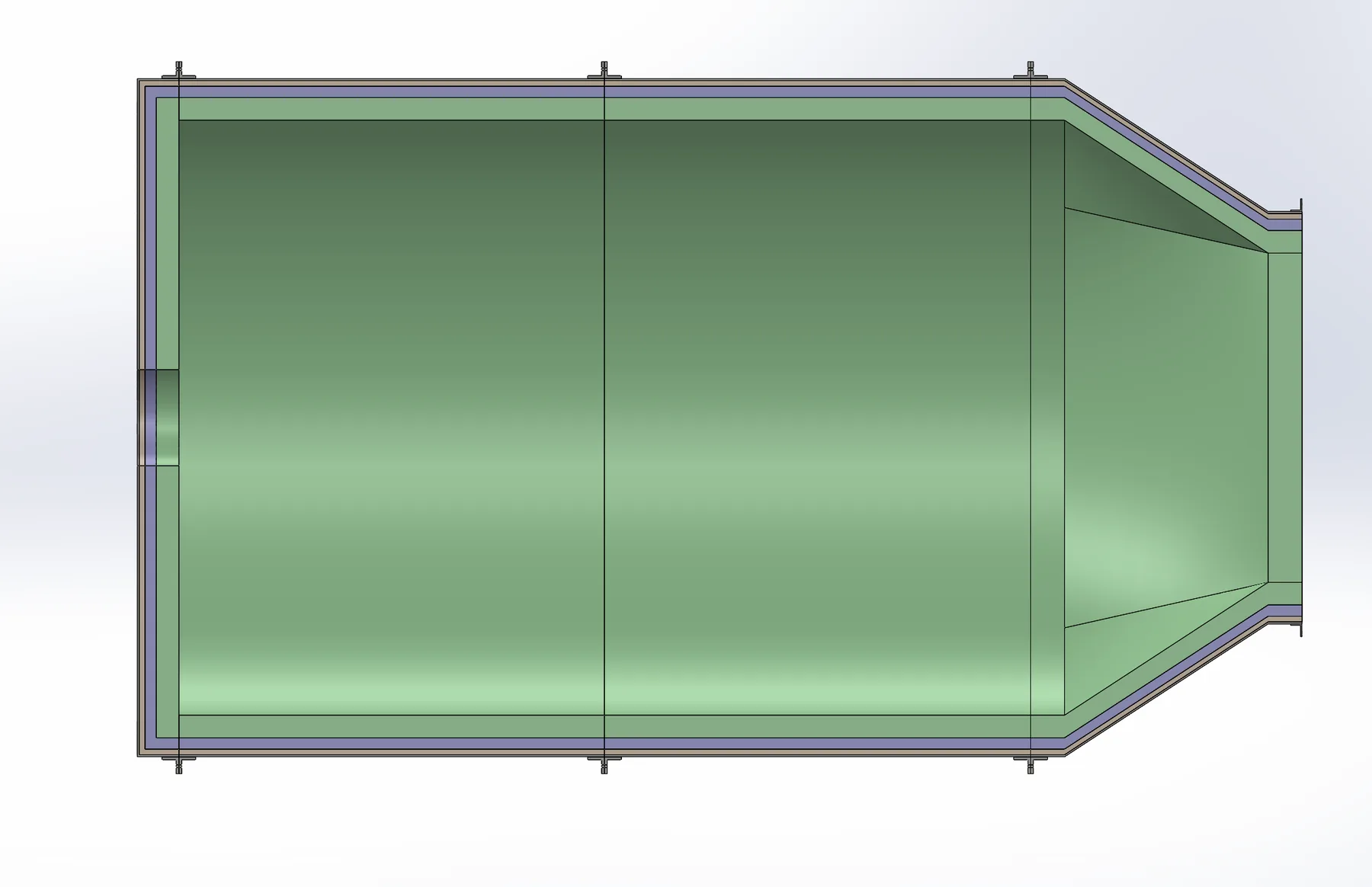
Layered Section View
A section view through the assembly shows its layered construction: a steel outer shell surrounding insulation layers and a refractory-material lining that forms the interior of the combustion box.
Drawing Package
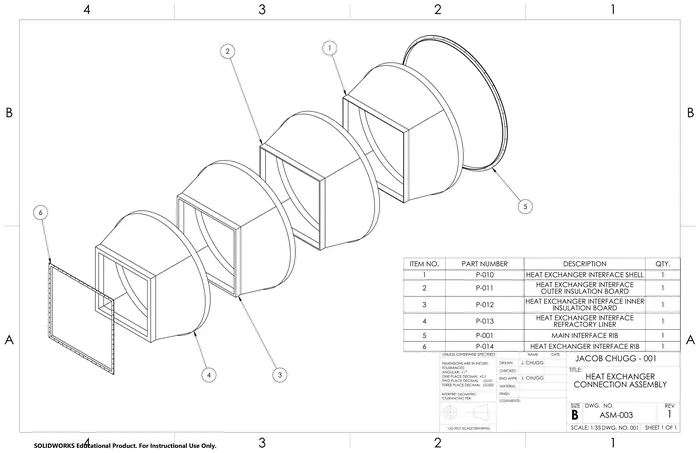
The complete drawing package includes toleranced part drawings and BOM/exploded views for the 14-part assembly, organized into three subassemblies — the main combustion box, the front cover, and the heat-exchanger connection — with interface dimensions coordinated with the heat-exchanger team. Detailed dimensions are omitted here; the views below show assembly structure only.
Toward Manufacture with Valar Atomics
The assembly is slated for manufacturing in collaboration with Valar Atomics. Interface dimensions between the combustion box and the heat-exchanger connection were coordinated directly with the heat-exchanger team to keep both halves of the design compatible as each progressed.